Risk management
7 questions to scope your project risks
Empowered teams need guardrails. Risk Management, tackles the practical realities that keep school heads awake: What if a student is injured in the garden? What if a compost project triggers parent complaints? We'll translate anxiety into action, developing checklists for liability, crafting communication templates for controversies, etc.
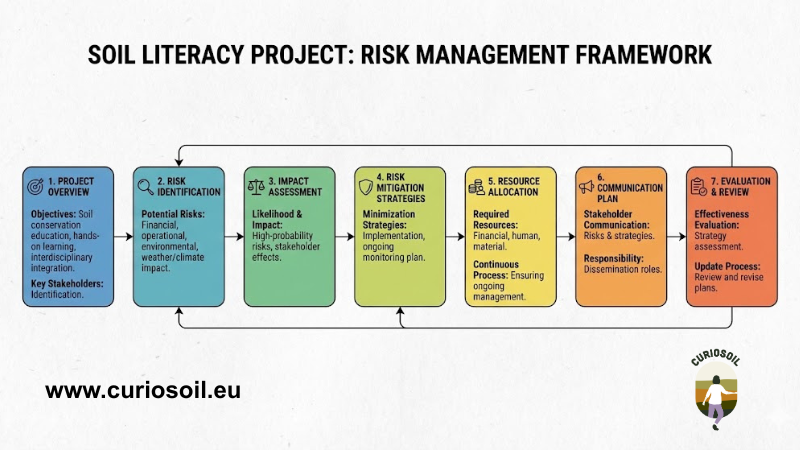
When thinking about implementing a soil literacy project, it is helpful to reflect on risk management. Answer the following questions and write a summary of your thoughts.
1. Project Overview: What are the main objectives of your soil literacy project? Who are the key stakeholders involved?
2. Risk Identification: What potential risks could affect the implementation (financial, operational, technical, environmental)? Weather conditions or environmental changes that could impact the project?
3. Impact Assessment: Which risks are most likely to occur, and what would be their impact? How would these risks affect the different stakeholders involved?
4. Risk Mitigation Strategies: What strategies can be implemented to minimize the likelihood and impact? How can the project be adapted if such risks cannot be fully prevented?
5. Resource Allocation: What resources (financial, human, material, and operational such as workspace + safety equipment) are required to manage these risks? How will you ensure risk management is a continuous process?
6. Communication Plan: How will you efficiently communicate risks and mitigation strategies to stakeholders? Who will be responsible for disseminating updates?
7. Evaluation and Review: How will you evaluate the effectiveness of your risk management strategies? What process will you use to review and update plans?