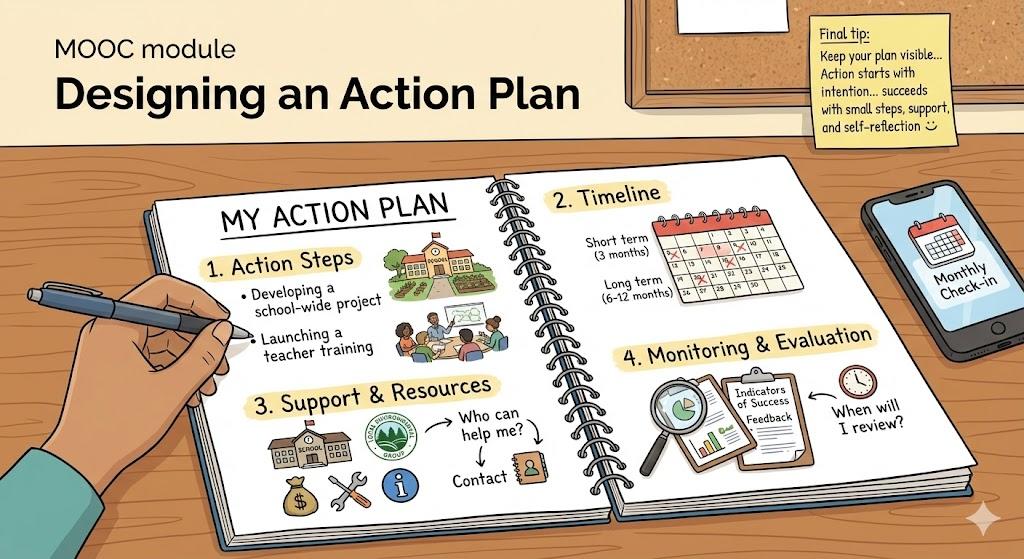
Personal learning objectives
Objective definition
1. Knowledge goals
Identify key soil literacy concepts relevant to primary education (e.g., basic soil types, importance of soil biodiversity).
Example: Understand soil health indicators and how they apply to classroom projects.
2. Skill development
Determine specific teaching skills to develop (e.g., facilitating outdoor learning activities, simple soil experiments).
Example: Learn techniques for engaging young students in ecological assessments through soil investigations.
3. Application goals
Specify practical ways to integrate acquired knowledge into classroom activities and school projects.
Example: Design soil-based science projects or incorporate soil literacy themes into existing subjects like science and geography.
4. Connection to current role
Align objectives: relate learning goals to your teaching responsibilities, focusing on enhancing the curriculum and supporting your role within the school.
Example: Tailor soil literacy content to complement current lesson plans and teaching objectives, ensuring alignment with educational standards.
5. Understanding personal responsibility
Role in education: Recognize your pivotal role in fostering soil literacy among students and colleagues. Be proactive in seeking out resources and opportunities for promoting sustainability education.
Example: realising that if you don’t teach soil literacy, your students might never learn why healthy soil matters to our food, water, and climate.
6. Commitment to advocacy
Develop initiatives that support your commitment to sustainable education practices.
Example: Act as a champion for soil literacy by organizing awareness days or campaigns focused on soil conservation.
7. Engagement with stakeholders
Plan engagement: Strategize on methods to collaborate with teachers, involve students, and engage the wider community.
Example: Foster partnerships with local gardens or agricultural experts for interactive learning experiences like workshops or gardening projects.
8. Professional options
Institutional development: Explore ways to incorporate soil literacy in programs, policies, and extracurricular activities.
Example: Develop school policies that emphasize environmental education, and organize inter-class competitions on soil projects.
9. Collaboration opportunities
Identify potential partnerships with community organizations or experts to enhance the soil literacy agenda.
Example: Coordinate guest lectures with local ecologists or arrange visits to nearby farms.
10. Resource allocation
Assess resources: Evaluate current resources and plan for what is needed to effectively integrate soil literacy.
Example: Review the budget for field trips or materials needed for hands-on soil experiments.
11. Planning resource reallocation
Create strategies to secure additional resources or reallocate existing ones to focus on soil literacy initiatives.
Example: Allocate time during staff meetings for collaborative planning on soil-related projects.

🛠 Hands-on activity