
4.D Sustainability
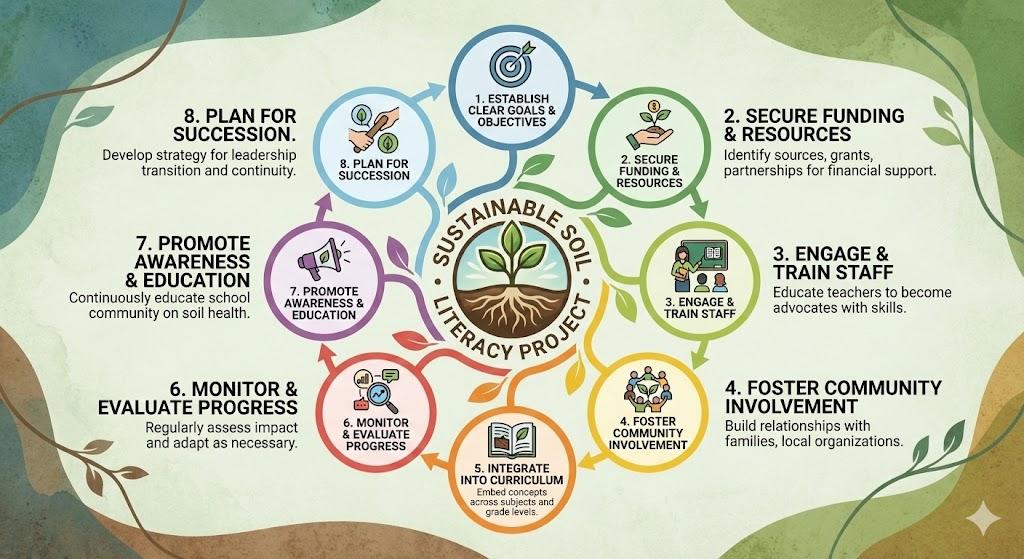
8 steps for long-term sustainability
Module 4.D ensures it outlasts your tenure. Sustainability focuses on embedding soil literacy institutionally: training "Soil Champion" teachers, weaving garden maintenance into facilities budgets, or making soil projects a pillar of new staff orientation. We'll confront attrition risks head-on, because true sustainability means the garden thrives when you're pulled into the next crisis meeting.
Establish Clear Goals and Objectives: Define the long-term aims of the project and align with the school's mission and educational goals.
Secure Funding and Resources: Identify potential funding sources, grants, or partnerships.
Engage and Train Staff: Educate and involve teachers and staff to become advocates and facilitators of the project.
Foster Community and Stakeholder Involvement: Build strong relationships with families, community members, local organizations, and experts.
Integrate into Curriculum: Embed soil literacy concepts into the curriculum across multiple subjects and grade levels.
Monitor and Evaluate Progress: Regularly assess impact via student feedback and project metrics.
Promote Awareness and Education: Continuously educate the school community about the importance of soil health.
Plan for Succession: Develop a strategy for leadership transition and continuity beyond the current team's involvement.
Take a moment to reflect: which of the above steps do you anticipate being the most challenging and why?
Soil governance, done right, can transform your school's ecosystem. Your goal isn't a perfect program — it's a self-replenishing culture. When budgets tighten or stakeholders waver, lean on the systems you've built. That parent-led soil safety protocol? It's now policy. The partnership with the local nursery? It's in the 5-year plan. Your legacy isn't a garden, it's the blueprint for how your school turns values into value. Soil teaches us: depth creates resilience. Dig deep here, and your leadership roots will hold.