
The Whole School Approach
Principles of the Whole School Approach
Parents invested? Now expand their role from supporters to co-architects. Section 2 shifts to whole-community engagement, where local farmers, businesses, and elders become governance partners. Learn to structure "Soil Stewardship Councils" that share ownership (e.g., a cafe owner donating compost bins, a retired agronomist advising student labs). This isn't volunteerism — it's resource diplomacy, converting community goodwill into tangible assets while distributing leadership burdens.
The Whole School Approach (WSA) is an educational strategy that involves collective and collaborative action among learners, staff, and the broader community to enhance learning, behavior, and wellbeing across the entire school environment, fostering inclusivity and community involvement.
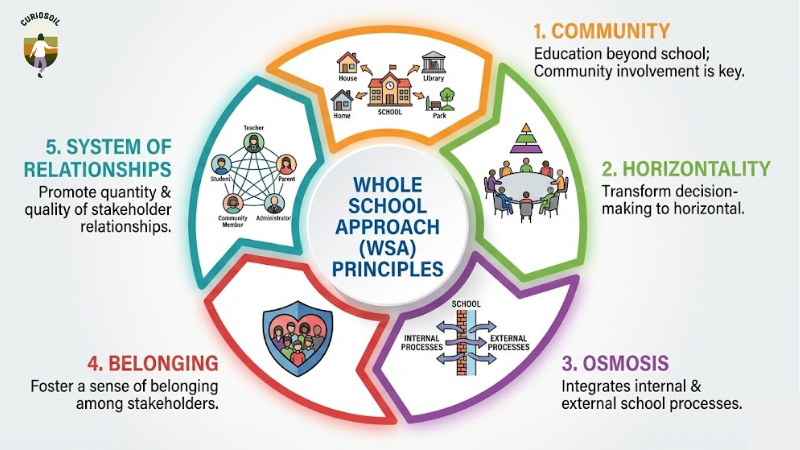
Principles of WSA:
Community: Education extends beyond school; community involvement is key.
Horizontality: Transform decision-making processes from hierarchical to horizontal.
Osmosis: Integrates internal and external school processes.
Belonging: Schools should foster a sense of belonging among stakeholders.
System of relationships: Promote both the quantity and quality of stakeholders' relationships.
📺 Videos
The Evolution of a Local Education Cluster