Cultivating collective efficacy
Three examples to start with
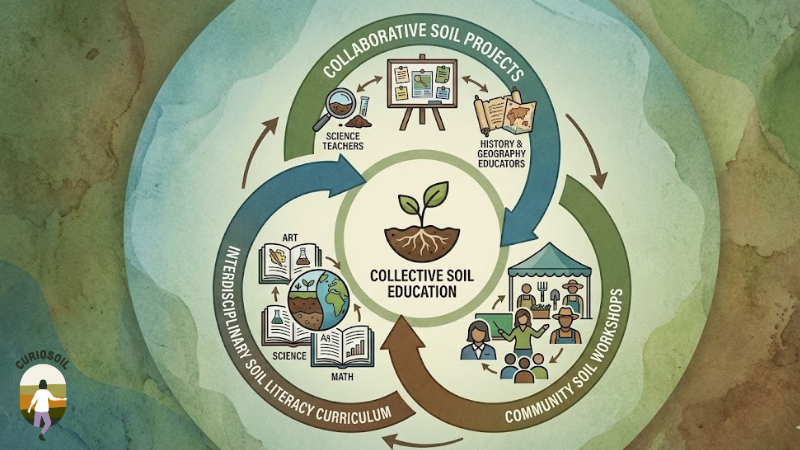
1. Collaborative Soil Projects. Imagine a school-wide initiative where teachers across disciplines collaborate to develop a project focused on soil health. Science teachers could guide students in conducting soil quality tests, while history and geography educators could explore soil's role in historical attitudes to soil, agricultural and forestry practices, land management mistakes that led to severe soil degradation and, consequently, decline of civilisation.
2. Community Soil Workshops. School heads can organize workshops on sustainable soil practices for the wider community. By involving teachers, students, and local experts (soil experts and teachers, foresters, agriculture extension service experts, farmers, gardeners), these events become a platform for sharing knowledge and practices.
3. Interdisciplinary Soil Literacy Curriculum. Developing an interdisciplinary curriculum around soil literacy can foster a sense of shared purpose among teachers. By integrating soil-related topics into various subjects, educators work together to provide students with a holistic understanding of soil's ecological and economic importance.
If you are interested to learn more, read the document below: